


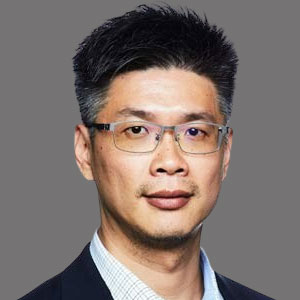
Dr. I-Chien (IC) Jan
In an interview with Startupcity APAC, Dr. I-Chien (IC) Jan, Founder and Managing Director of Taiwan Global Angels, highlights the focus on manufacturing and the generation gap among Taiwanese populations in the U.S.
Dr. Jan shares insights into his personal initiatives, such as his involvement in the medical devices industry and his role as a mentor at Berkeley SkyDeck. He also highlights the establishment of Taiwan Global Angels, a venture that aims to bring valuable resources and investments to startups based in the U.S.
Can you provide an overview of your professional journey in the industry, including your current roles and responsibilities within your organization?
I currently hold the position of co-founder and managing director at Taiwan Global Angels, an angel group based in Berkeley, located in the Bay Area. Our organization comprises members from Taiwan as well as other global regions such as the U.S., Japan, the UK, and Singapore.
My professional journey has been diverse, with 15 years of experience working with venture and startup companies in Taiwan. I have actively participated as both a founder and investor in the vibrant Taiwanese ecosystem. In 2019, I expanded my investment endeavors by venturing into the Taiwanese stock market.
While currently residing in the San Francisco Bay Area for the past three and a half years, I make regular visits to Taiwan to maintain crucial connections. These trips are essential for engaging with various stakeholders, including companies, government officials, private sector representatives, and members of our angel group’s exclusive club while supporting the growth of the Taiwanese startup ecosystem.
What are some of the key challenges faced by the Taiwanese ecosystem in terms of business expansion, investment, and fostering the growth of new industries?
One of the major challenges in Taiwan’s industry stems from its strong focus on manufacturing, particularly in electronics, chips, semiconductors, and Integrated Circuits (ICs). Taiwan’s regulations and capital market infrastructure are well-suited for supporting manufacturing companies, often requiring significant capital investments for equipment and operations. However, these regulations may not be as optimized for industries that are more focused on intellectual property (IP) or software, which typically have higher hiring risks but also offer higher returns on investment.
As someone involved in investing in biotech and internet software for several years, I have witnessed the challenges faced by founders in Taiwan when it comes to international business and expanding abroad for business development or fundraising. Despite its manufacturing prowess, the Taiwanese ecosystem may not have the same level of support or infrastructure for intellectual property-focused industries.
“In contrast to the past when China was the global epicenter, the Asia Pacific region outside of China has the potential to become a new hub for innovation and investment.”
Another challenge I observe is the generation gap among the Taiwanese population in the U.S. Before 2000, there was a significant trend among the older generation, especially the baby boomers (born in the late 1930s to 1950s), to pursue overseas studies. In comparison, my generation—born in 1976—experienced a dramatic change in the overseas Taiwanese population.
The Taiwanese economy experienced substantial growth in manufacturing and outbound industries after 2000. This led to increased opportunities for fresh graduates, making staying in Taiwan or the Asia Pacific region more attractive than going abroad. Many young talents remained in Taiwan or the Asia Pacific region, while the older generation often came to the U.S. for study, work, or family reasons. However, reconnecting with this senior generation and bridging the generation gap has become challenging due to their decreasing population and the time gap between their experiences and the current generation. Additionally, while manufacturing in China brought significant profits to Taiwanese companies, there was a lack of awareness about the potential risks and changes in the global landscape. The US-China trade war and the COVID-19 pandemic have caused disruptions to supply chains and raised concerns about dependence on China.
What strategies, projects, or initiatives are you currently implementing or leading within the industry?
I had the opportunity to receive a one-year scholarship from the Taiwanese government to conduct research on the ecosystem at UC Berkeley. However, my plans were affected by the onset of the COVID-19 pandemic in 2020. Despite the challenges, I decided to stay and continued my journey. After completing my scholarship, I joined a Taiwanese company in the medical devices industry. It was during this time that I gained valuable insights into the challenges faced by Taiwanese companies when expanding into new markets, including product development, team recruitment, and fundraising.
In parallel to my work in the medical devices industry, I also became a mentor at Berkeley SkyDeck, a prominent startup accelerator affiliated with UC Berkeley. Additionally, I mentored various startups and provided guidance, particularly in the areas of high-tech and hardware supply chain management.
Due to increasing regulations and limitations in sourcing components from China, Taiwan has regained significance as a crucial player in the supply chain. To address these challenges and leverage the opportunities arising from the shifting landscape, we formed our NGO group, Talent Global Angels. Starting with 50 members, we now have around 60, as we aim to bring not just financial resources but also valuable expertise, networks, and investments from Taiwanese corporations, ventures, small and medium-sized businesses (SMBs), and entrepreneurs. Our focus is on investing in US-based startups, especially in deep tech fields such as green tech, small tech, and health tech, primarily in the Bay Area and Boston.
The core thesis behind our initiatives is the labor shortage and aging population trends exacerbated by the pandemic. Automation, digital transformation, robotics, and AI are not just driven by technology, but also by the increasing demand for solutions to address these challenges. Both the demand and supply sides are experiencing a paradigm shift in the software and hardware-driven economy. Consequently, we have been investing in automation and deep tech companies in the US from Taiwan since last year. Our investments have been performing well, with $6 million invested in the previous year and approximately $4 million in the first quarter of this year.
We believe that the timing is right for countries in the Asia Pacific region, including not only Taiwan but also Japan, Korea, Singapore, and India, to play a significant role in the new paradigm shift. In contrast to the past when China was the global epicenter, the Asia Pacific region outside of China has the potential to become a new hub for innovation and investment.
What would your advice to fellow peers in the industry?
As professionals in the industry, we have a unique opportunity to contribute significantly to the growth and success of businesses. One valuable area where we can assist in helping U.S. companies expand into the Asian market. Taiwan, in particular, holds a distinctive position due to our extensive experience and familiarity with the region’s three most prominent countries; the U.S., China, and Japan. For 50 years, we have developed a deep knowledge of their cultures, people, economies, and the nuances of conducting business, including laws, politics, and regulations.
Our focus lies not only in providing investment opportunities, but also in leveraging our strengths in manufacturing capabilities, extensive research resources, and clinical research expertise, particularly in the medical devices and high-tech sectors. We can assist in sourcing reliable supply vendors, establishing commercial relationships, and navigating the complexities of doing business in the region.
